Scaling a business gets easier when HR stops running on spreadsheets, inbox searches, and “quick calls” that eat half the day. The right HR technology gives growing companies cleaner hiring, faster onboarding, better payroll, and fewer compliance surprises. Strong onboarding alone can improve new hire retention by 82% and productivity by 70% [source: Brandon Hall Group].
TLDR: Growing teams need HR tools that remove repeat work and prevent people data from getting scattered. For example, a 60-person company hiring 10 people per month can save dozens of admin hours by using an applicant tracking system, automated onboarding, and payroll software. If each manual onboarding takes 3 hours, automation that cuts it to 45 minutes saves more than 22 hours a month. That time can go back into interviews, manager training, and employee support.
1. Applicant Tracking Systems
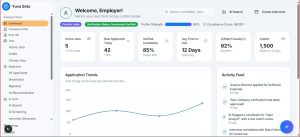
An applicant tracking system, or ATS, keeps hiring from becoming a messy email pile. It tracks roles, candidates, interview notes, scorecards, and offers in one place. This matters when five managers are hiring at once and nobody remembers who approved what.
The annoying part? Bad systems add extra clicks. A simple interview note should not take 90 seconds to save. Good ATS tools keep the process short and clear.
2. HR Information Systems
An HRIS is the central record for employee data. It stores job titles, pay details, documents, time off, emergency contacts, and reporting lines. Without it, HR ends up fixing the same name, address, or salary error in three places.
For a scaling company, an HRIS acts as the base layer. Other tools often connect to it, which reduces duplicate data entry.
3. Payroll Automation
Payroll mistakes hurt trust fast. Automated payroll software calculates wages, taxes, deductions, bonuses, and reimbursements. It also creates records for finance and tax reporting.
This is one of the first tools a growing company should add. Paying 12 people by hand may work for a while. Paying 120 people that way is asking for trouble.
4. Onboarding Platforms
Onboarding software helps new hires start with less confusion. It can send offer documents, collect tax forms, assign training, request equipment, and remind managers to schedule check-ins.
It also creates a better first week. New employees should not spend day one asking where their laptop is or who can approve software access.

5. Learning Management Systems
A learning management system, or LMS, gives employees a place to complete training. It can handle compliance lessons, manager education, product knowledge, and skills development.
This is useful when training needs to be consistent. One manager should not give a 10-minute safety talk while another sends a three-year-old PDF and hopes for the best.
6. Performance Management Tools
Performance tools help teams track goals, feedback, reviews, and career plans. They replace the once-a-year review that everyone dreads.
Good tools support short check-ins and clear goals. Employees should know what “good work” means before review season arrives. Managers also get a record of feedback, which reduces bias and memory gaps.
7. Employee Engagement Platforms
Engagement software collects feedback through pulse surveys, comments, and sentiment scores. It helps leaders spot problems before people quit.
It drives many HR teams crazy when survey tools collect data but offer no clear next step. The best platforms show patterns by team, location, or role while protecting privacy.
8. Time and Attendance Systems
Time tracking tools record hours, shifts, breaks, overtime, and absences. They are vital for hourly teams, remote teams, and companies with several locations.
They also reduce payroll disputes. A manager can check approved hours instead of hunting through texts, paper sheets, and calendar notes.
9. Benefits Administration Software
Benefits tools help employees choose health plans, retirement options, leave programs, and other perks. They also help HR manage open enrollment and carrier files.
As headcount rises, benefits questions multiply. A platform with self-service answers can cut repeat questions and make employees feel less lost.
10. People Analytics Tools
People analytics software turns HR data into useful reports. Leaders can see hiring speed, turnover, pay gaps, absence trends, promotion rates, and team growth.
This helps the business plan with facts. If one department has 28% turnover while the company average is 11%, leaders can act before the cost grows.

How These Tools Work Together
The real value comes when systems share data. A candidate becomes an employee in the ATS, moves into the HRIS, starts onboarding, gets paid, joins benefits, and begins training. No one should retype the same information six times.
Smaller companies do not need every tool on day one. A practical order is: payroll, HRIS, ATS, onboarding, then performance and engagement. After that, learning, time tracking, benefits, and analytics can fill the gaps.
FAQ
What HR technology should a growing business buy first?
Most growing businesses should start with payroll software and an HRIS. These tools protect pay accuracy and keep employee records clean.
When does a company need an ATS?
An ATS becomes useful when hiring is steady, roles overlap, or several managers interview candidates. If candidate feedback lives in email threads, it is time.
Can small businesses use HR technology?
Yes. Many tools have small business plans. The goal is not to buy everything. The goal is to remove the work that causes errors and delays.
What is the biggest mistake when choosing HR software?
The biggest mistake is buying a tool that looks impressive but feels painful to use. If employees avoid it, the system will fail.
How can HR tech improve retention?
It can improve retention through better onboarding, clearer goals, faster feedback, stronger training, and earlier warning signs when teams are unhappy.