
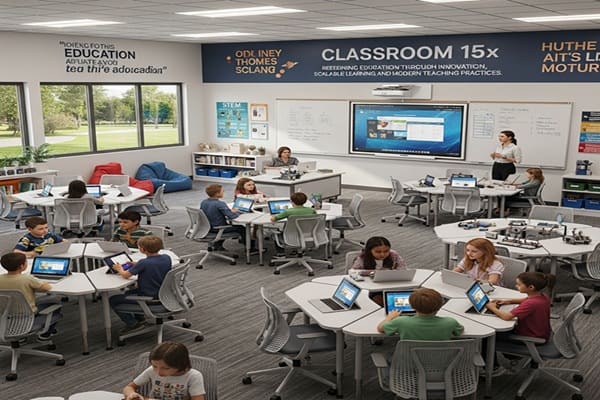
The term “Classroom 15x” is popping up everywhere—from teacher workshops to ed-tech conferences and online education forums. But what does it really mean? Is it a physical classroom setup, a tech platform, or a new teaching method? The short answer: it’s none of those individually.
Classroom 15x is an educational framework designed for scalability, adaptability, and innovation. Think of it as a way to take one effective teaching approach and multiply it across classrooms, students, and even schools, without losing quality or consistency.
In simpler terms, Classroom 15x is about making the classroom experience bigger, better, and more flexible. Teachers can reach more students, schools can stretch their resources, and learners get richer, more modern educational experiences.
The Need for Classroom 15x
Education systems face growing pressures: more students, tighter budgets, and the demand to teach skills for the 21st century. Traditional classrooms, with a single teacher and a fixed number of desks, struggle to keep up.
Classroom 15x responds to these challenges by:
-
Scaling teaching across multiple groups
-
Integrating technology seamlessly
-
Supporting adaptive and collaborative learning
-
Making resources available beyond physical walls
As one researcher put it: “The classroom of the future isn’t about replacing teachers—it’s about multiplying their impact.” That’s exactly what Classroom 15x aims to do.
Origins of Classroom 15x
The idea behind Classroom 15x isn’t brand-new. Its roots go back to late 20th-century experiments in educational design. Educators started asking:
Can one teacher effectively reach more students without compromising quality?
Early attempts included:
-
Distance learning via radio
-
Online courses and e-learning labs
-
Blended teaching in schools with limited resources
The “15” doesn’t mean exactly fifteen students or classrooms. It symbolizes multiplication and expansion, showing that one strong teaching model can work across multiple contexts.
The rise of high-speed internet, e-learning platforms, and adaptive technology in the 2000s accelerated adoption. Then, the pandemic underscored the need for scalable learning models, showing that remote tools were no longer optional—they were essential.
Core Principles of Classroom 15x
Classroom 15x works because it’s built on six key principles:
-
Scalability – Lessons and strategies are designed to reach multiple classrooms, campuses, or even countries.
-
Adaptability – Materials can be customized for different student needs while maintaining quality.
-
Technology Integration – Digital tools like AI, interactive simulations, and video platforms are embedded, not just added on.
-
Collaborative Learning – Peer-to-peer and group projects are emphasized to maintain engagement across expanded models.
-
Teacher Amplification – Teachers become facilitators and mentors, multiplying their impact across students.
-
Equity and Access – Focus on including underserved populations, ensuring no student is left behind.
One educator summed it up nicely: “Classroom 15x isn’t about teaching fifteen times more students; it’s about creating fifteen times the opportunities.”
How a Classroom 15x Environment Works
Unlike traditional classrooms with fixed desks and chalkboards, Classroom 15x blends physical and digital environments. Here’s how it compares:
| Aspect | Traditional Classroom | Classroom 15x Model |
|---|---|---|
| Teacher’s Role | Primary knowledge provider | Facilitator, mentor, and content amplifier |
| Student Reach | Limited to classroom size | Scalable across digital and physical spaces |
| Learning Resources | Textbooks, notes, lectures | Digital platforms, adaptive tools, simulations |
| Flexibility | Fixed schedule | Flexible timing, hybrid delivery |
| Collaboration | Local peers only | Global collaboration networks |
| Equity | Restricted by geography/resources | Designed for inclusion and wide access |
This hybrid approach allows lessons created in one setting to be repurposed and shared widely, making high-quality education accessible even in rural or underfunded areas.
Where Classroom 15x Fits
The applications are broad, covering K–12, higher education, professional development, and special education:
-
K–12: Teachers create interactive modules reusable across multiple classes, saving prep time and maintaining consistency.
-
Higher Education: Universities can scale lecture-based courses through recorded sessions, digital labs, and collaborative forums.
-
Professional Training: Companies deliver training to employees globally without repeating sessions in every office.
-
Special Education: Adaptive tools allow students with different abilities to access tailored learning materials.
In essence, Classroom 15x bridges gaps, making education more efficient and equitable.
Benefits of Classroom 15x
The advantages extend to students, teachers, parents, schools, and society at large:
-
Efficiency for Teachers: Reuse lessons to reduce repetitive tasks.
-
Student Empowerment: Flexible and personalized learning journeys.
-
Global Collaboration: Students can connect across regions, building cultural awareness.
-
Cost-Effectiveness: Schools can expand reach without extra expenses.
-
Crisis Resilience: Supports learning continuity during emergencies.
| Stakeholder | Key Benefits |
|---|---|
| Students | Personalized pathways, flexible learning modes |
| Teachers | Amplified impact, reduced workload |
| Parents | Better visibility, more support for home learning |
| Schools | Scalability, cost savings |
| Society | Improved literacy, workforce readiness, equitable education |
Challenges and Criticisms
No system is perfect. Classroom 15x faces its share of concerns:
-
Potential Depersonalization: Students may feel disconnected if human interaction is limited.
-
Infrastructure Barriers: Underfunded schools may struggle with tech adoption.
-
Teacher Training Needs: Educators must adapt to amplified roles effectively.
-
Digital Equity: Device and internet access disparities remain a challenge.
These issues aren’t insurmountable. Thoughtful design, policy support, and community partnerships can minimize risks.
Why Classroom 15x Matters Today
Remote work, global collaboration, and digital transformation are no longer trends—they’re reality. Classroom 15x aligns perfectly with modern education demands, emphasizing:
-
Critical thinking
-
Adaptability
-
Digital literacy
-
Collaboration beyond the classroom
As one teacher put it: “The classroom is no longer a room—it’s a network.” Classroom 15x embodies this by making learning networked, scalable, and future-ready.
Governments, NGOs, and private organizations are adopting it as a sustainable model for both urban and rural education systems.
Also Read : Diuretyk: A Complete Informational Guide to Uses, Benefits, Types, and Safety Considerations
Getting the Most Out of Classroom 15x
To maximize the benefits:
-
Blend physical and digital spaces for hybrid learning
-
Train teachers to act as mentors and facilitators
-
Provide reliable tech infrastructure for students and educators
-
Focus on collaboration and adaptive learning
-
Regularly review and refine lessons for scalability and engagement
The Future of Learning
Classroom 15x isn’t a passing trend—it’s a response to pressing educational needs. By combining scalability, adaptability, and innovation, it:
-
Transcends physical limits
-
Empowers teachers and students
-
Bridges educational gaps
-
Prepares learners for the demands of a global, digital world
“We cannot prepare students for the future with classrooms from the past.” Classroom 15x is that future—dynamic, inclusive, and transformative.
FAQs About Classroom 15x
1. What does “15x” mean?
It symbolizes scalability, showing that effective teaching can be multiplied without losing quality.
2. Is Classroom 15x only digital?
No. It blends physical classrooms with digital tools for maximum flexibility.
3. How is it different from online learning?
It goes beyond shifting classes online—emphasizing scalability, teacher amplification, and inclusivity.
4. What are the main challenges?
Infrastructure gaps, teacher training, and maintaining personal connections are key hurdles.
5. Who benefits most?
Students, teachers, and society—through equitable access, amplified teaching, and workforce readiness.