
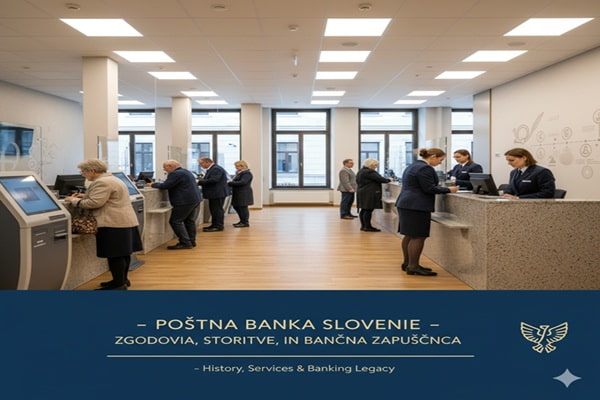
Ever walked into a post office to mail a letter and thought, “Hey, I could also open a bank account here”? No? Fair. But that exact idea powered Poštna banka Slovenije, and IMO, that’s what made it kind of brilliant. This wasn’t a flashy Wall Street-style bank. It felt more like a friendly neighbor who handled your money without making things awkward.
I’ve always loved odd banking models the ones that don’t scream “corporate marble floors and confusing paperwork.” Poštna banka Slovenije (PBS) fits that category perfectly. So grab a coffee, and let’s chat about what it was, why it mattered, and why people still Google it years after it merged away.
What Exactly Was Poštna banka Slovenije?
Poštna banka Slovenije worked as Slovenia’s postal bank, and yes, that meant it ran through post offices instead of shiny standalone branches. People walked into their local post office, paid bills, mailed packages, and handled banking in one stop. Efficient, right?
The bank focused on everyday people, not high-flying investors. It offered practical financial services that normal folks actually needed. No nonsense, no overcomplication.
And honestly, doesn’t banking feel easier when it happens in a place you already trust?
Why a Postal Bank Even Made Sense
Slovenia gained independence in the early 1990s, and the country needed a banking system that worked fast and worked everywhere. Building hundreds of new bank branches would’ve burned time and money. The postal network already existed, so PBS used it.
That move felt smart, not lazy.
Post offices already reached small towns, villages, and rural areas, so PBS instantly gained nationwide coverage. People didn’t need to travel hours just to open an account. They just showed up where they already went.
That kind of accessibility hits differently, doesn’t it?
How the Postal Banking Model Worked
Banking at the Post Office Counter
Poštna banka Slovenije partnered with Pošta Slovenije, which meant postal clerks handled basic banking services. Customers dealt with familiar faces instead of intimidating bankers in suits.
That setup:
-
Built trust fast
-
Reduced operating costs
-
Made banking feel less stressful
FYI, this model worked long before “financial inclusion” became a buzzword.
Simple Services That Actually Helped
PBS didn’t try to reinvent banking. It focused on core services people used every day, such as:
-
Savings and checking accounts
-
Domestic and international money transfers
-
Debit cards
-
Consumer loans
-
Housing loans
-
Foreign exchange services
-
Small business banking
That list looks boring on paper, but boring works when you need reliability.
Why People Trusted Poštna banka Slovenije
Trust matters in banking more than flashy apps or marketing slogans. PBS built trust by being predictable and present.
People saw the post office as a public institution, not a profit-hungry corporation. When PBS attached itself to that image, customers felt safer handing over their money.
Have you ever noticed how familiarity reduces fear? That psychology played a huge role here.
Financial Inclusion Before It Was Cool
Serving Rural Communities
Many Slovenian villages lacked traditional bank branches. PBS filled that gap without building new infrastructure.
People could:
-
Deposit money locally
-
Withdraw cash nearby
-
Pay bills without long travel
That convenience improved everyday life in quiet but meaningful ways.
Helping the Elderly and Vulnerable
Older customers often struggled with complex banking systems. PBS offered face-to-face service, clear explanations, and familiar environments.
That human touch mattered. It still does.
My Take on the PBS Approach
IMO, modern banks lost something when they ditched human-first models. PBS didn’t overwhelm customers with options. It didn’t push aggressive upsells. It just… worked.
I always admire systems that respect users instead of confusing them. PBS respected people’s time and intelligence, and that’s rare.
Don’t you wish more banks did that?
Ownership Changes and Strategic Shifts
Nova KBM Enters the Picture
In 2004, Nova Kreditna banka Maribor (Nova KBM) acquired a majority stake in Poštna banka Slovenije. Pošta Slovenije kept a minority share, so the postal connection stayed alive.
This partnership strengthened PBS’s financial backing while preserving its identity.
That balance mattered until the market forced bigger changes.
Why the Merger Eventually Happened
By the 2010s, banking regulations tightened across Europe. Compliance costs rose. Digital transformation demanded serious investment.
Small and mid-sized banks faced pressure to consolidate.
So in 2016, Poštna banka Slovenije officially merged into Nova KBM. PBS stopped existing as a separate legal entity, and Nova KBM absorbed all customers, accounts, and services.
Change stings, but this one made sense.
What Happened to Customers After the Merger?
Customers didn’t lose access to their money or services. Nova KBM handled the transition smoothly.
People gained:
-
Broader digital banking tools
-
Larger ATM and branch networks
-
Expanded financial products
They lost the PBS name, but they kept continuity.
Would you trade nostalgia for better services? Most people did.
The Legacy Poštna banka Slovenije Left Behind
A Blueprint for Accessible Banking
PBS proved that banking doesn’t need luxury branches to succeed. It needs reach, trust, and simplicity.
Postal banking models still influence financial inclusion strategies worldwide.
Human-Centered Service
PBS prioritized:
-
Face-to-face interaction
-
Clear communication
-
Local presence
Those values still matter, even in app-driven banking.
Working at Poštna banka Slovenije
Employee reviews painted PBS as a stable and balanced workplace. Staff enjoyed predictable routines, decent work-life balance, and strong institutional support.
Sure, the job lacked excitement, but stability beats burnout any day :/
Also Read : Daniel Broglie: Swiss Business Leader & Trade Visionary
How PBS Compared to Traditional Banks
PBS Strengths
-
Nationwide access through post offices
-
Lower operational costs
-
Stronger community trust
Traditional Bank Strengths
-
Advanced digital services
-
Wider product portfolios
-
Greater international reach
PBS excelled at basics. Traditional banks excelled at scale.
Neither model felt perfect, but PBS nailed what it set out to do.
Why People Still Search for Poštna banka Slovenije
Even years after the merger, people still Google PBS. That curiosity comes from:
-
Old account records
-
Historical interest
-
Nostalgia
-
Research into postal banking models
A forgotten bank doesn’t generate searches. A meaningful one does.
Lessons Modern Banks Could Learn from PBS
Modern banks chase innovation, but PBS reminds us that:
-
Accessibility beats complexity
-
Trust beats flashy branding
-
Human contact still matters
Ever noticed how fintech keeps “rediscovering” these ideas? Yeah.
The Bigger Picture: Slovenia’s Banking Evolution
PBS mirrored Slovenia’s transition:
-
From state-run systems to market-driven banking
-
From physical access to digital dominance
-
From local institutions to consolidated giants
PBS didn’t fail. It evolved into something bigger.
That distinction matters.
Would Postal Banking Work Today?
Digital banking dominates now, but postal banking still works in regions with:
-
Limited internet access
-
Aging populations
-
Rural geography
PBS’s model still feels relevant in the right context.
Would it succeed everywhere? Probably not. Could it help specific communities? Absolutely.
Key Takeaways Worth Remembering
Let’s recap the essentials:
-
Poštna banka Slovenije used post offices to deliver banking services
-
It improved financial inclusion across Slovenia
-
It merged into Nova KBM in 2016
-
Its legacy still influences banking philosophy
Simple story. Big impact.
Final Thoughts
Poštna banka Slovenije didn’t chase trends. It solved problems quietly and efficiently. That approach earned loyalty, trust, and lasting relevance.
Even though the name disappeared, the idea didn’t. Accessible banking still matters, and PBS proved that you don’t need flashy innovation to change lives.
So next time someone calls banking boring, remind them that a post office once helped run a national bank and did it pretty well.