
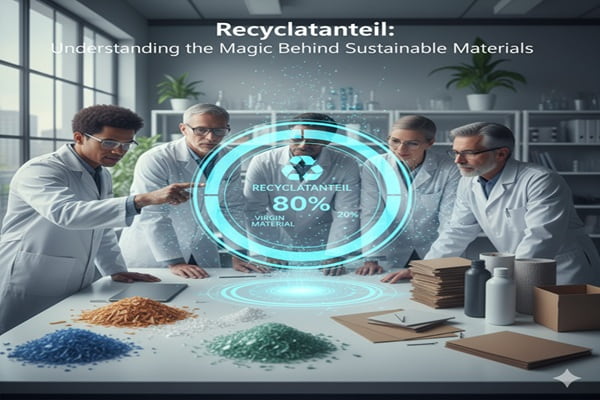
Hey there! So, have you ever noticed those labels on products that mention “made with recycled materials” or “contains X% recyclate”? If you’re like me, you might have shrugged and thought, “Cool, but what does that even mean?” Well, today we’re chatting about recyclatanteil, the unsung hero of sustainable materials that’s slowly taking over the way we produce, consume, and think about stuff. Stick around, because I promise it’s more interesting than it sounds, and FYI it might just make you rethink your shopping habits.
What Exactly is Recyclatanteil?
Alright, first things first. Recyclatanteil is basically the German term for the proportion of recycled content in a product. Yep, it’s as simple as that. But don’t let the simplicity fool you this little percentage packs a punch in terms of environmental impact.
Think of it like this: every time a manufacturer uses recycled materials instead of fresh, raw resources, they’re saving energy, reducing waste, and cutting down on carbon emissions. It’s basically the eco-friendly version of getting bonus points for doing your homework.
Why Should You Care?
I get it you might be thinking, “Cool story, but why should I care about some percentage on a product label?” Well, here’s the thing: recyclatanteil directly affects how sustainable your consumption is. The higher the recyclate content, the less pressure we put on virgin resources. That means fewer forests chopped down, less mining, and a smaller ecological footprint.
Plus, it’s a subtle way to vote with your wallet. By choosing products with a higher recyclatanteil, you’re basically nudging companies to up their sustainability game.
How Recyclatanteil Works in Everyday Products
You’d be surprised how many products already contain recycled content, often without you noticing. Here are a few examples:
-
Plastic packaging: Many water bottles, food containers, and packaging films now include up to 50% recycled plastic.
-
Paper products: Think notebooks, printer paper, and even cardboard boxes. Using recycled fibers reduces tree cutting and energy consumption.
-
Metals: Aluminum cans are a classic recycling aluminum uses about 95% less energy than producing new metal.
-
Clothing: Yep, fast fashion brands are jumping on the bandwagon, using recycled polyester from old bottles or fabrics.
Fun fact: Ever wondered why some plastics feel slightly different or papers are a bit rougher? That’s often because they include higher percentages of recycled material proof that recyclatanteil isn’t just a number; it changes the product itself.
The Benefits of High Recyclatanteil
I know, I know sometimes eco-talk can sound preachy. But here’s the deal: recyclatanteil actually brings real, tangible benefits, and not just for the planet. Let’s break it down:
1. Environmental Impact
-
Reduces landfill waste: More recyclate = less garbage piling up.
-
Cuts down energy usage: Producing materials from scratch is energy-hungry; recycled materials need far less power.
-
Lowers carbon footprint: Fewer emissions mean cleaner air, which is kinda important if you like breathing.
2. Cost Efficiency
Believe it or not, using recycled materials can sometimes save manufacturers money, which is why we see a rise in products proudly labeled with their recyclatanteil. And yes, a bit of that saving can trickle down to your wallet.
3. Resource Conservation
We only have so much of everything trees, minerals, water, you name it. By supporting products with high recyclatanteil, we help conserve finite resources for future generations.
Recyclatanteil in the Circular Economy
Here’s where things get a little fancy. You might have heard about the circular economy, which is basically the opposite of the “take-make-dispose” model. In a circular system, materials keep circulating, getting reused, repurposed, or recycled instead of ending up in landfills.
How Recyclatanteil Fits In
-
High recyclatanteil = stronger circularity: The more recycled content, the more efficient the loop.
-
Encourages innovation: Companies invest in better recycling technologies to maintain quality while increasing recyclate percentages.
-
Boosts sustainability branding: Brands can proudly market eco-friendly products, attracting conscious consumers.
Ever noticed how some eco-friendly brands make a big deal about 70-80% recyclate in their products? That’s not just marketing fluff they’re really trying to close the loop.
Challenges and Misconceptions
Now, not everything about recyclatanteil is sunshine and rainbows. There are some real challenges and a few myths floating around:
Misconception #1: All Recycled Materials Are Equal
Not true. Quality matters. Some recycled plastics degrade after multiple cycles, affecting product durability. That’s why companies often mix virgin and recycled materials for the best results.
Misconception #2: High Recyclatanteil = Perfectly Sustainable
Hold up. A product can have 100% recyclate but still be energy-intensive to produce or transported across continents, offsetting some benefits. Sustainability isn’t just a number it’s about the whole lifecycle.
Challenge: Infrastructure Limitations
Recycling systems vary by region. Some materials can’t be easily collected or processed, meaning the potential for high recyclatanteil is capped by logistics and technology.
How to Choose Products With High Recyclatanteil
Okay, let’s get practical. If you want to make smarter choices, here’s a mini cheat sheet:
-
Check labels: Look for percentages or “contains recycled content.”
-
Go for certified products: Certifications like ISO 14021 can verify recycled content claims.
-
Support local brands: They often have shorter supply chains and better recycling practices.
-
Ask questions: Don’t be shy to reach out to brands transparency matters.
Pro tip: Even small switches matter. A notebook with 50% recycled content instead of 0% saves resources over time, and multiply that by millions of consumers…well, you see where I’m going.
Real-Life Examples I’ve Seen
I’ll admit, I was skeptical at first. Like, how much difference can a few recycled materials make? But here’s what I noticed:
-
Plastic bottles: Swapping out my old-brand bottles for ones with 70% recyclate felt like a small but meaningful win. Plus, they hold up just as well!
-
Office paper: Using recycled paper at work reduced waste noticeably our bins weren’t overflowing anymore.
-
Clothes: I bought a recycled polyester hoodie, and honestly, it’s comfy and durable. Bonus: I feel slightly less guilty about fast fashion 🙂
These small tweaks show that recyclatanteil isn’t just corporate jargon it’s actionable in daily life.
Also Read : Karron Eubank: The Woman Behind the Eubank Name
Future Trends in Recyclatanteil
The good news? Things are only getting better. Some trends I’m excited about:
-
Higher recyclate percentages: Companies are pushing toward 80-100% recyclate in packaging and products.
-
Advanced recycling tech: Chemical recycling is breaking down plastics to original monomers, making near-virgin quality possible.
-
Consumer awareness: More of us care about what we buy, and that demand pressures companies to prioritize recyclatanteil.
Imagine a world where almost everything we use comes from recycled materials. Sounds ideal, right? But it’s also realistic if we keep supporting circular economy principles.
Common Questions About Recyclatanteil
Q1: Does it make products more expensive?
Not necessarily. Some items may cost a bit more upfront, but long-term savings on resources and energy often balance it out. Plus, the environmental “currency” is worth it.
Q2: Can I trust recyclate percentages on labels?
Mostly yes, especially if certified. But transparency varies, so check for third-party verification whenever possible.
Q3: Is recycled material always lower quality?
Not really. Modern technology has improved recycled material quality tremendously. Some products are indistinguishable from virgin materials, both in feel and performance.
My Take on Recyclatanteil
IMO, recyclatanteil is one of the easiest ways to make your lifestyle more sustainable without going full-zero-waste. Small changes like choosing products with higher percentages of recycled content add up to a big environmental impact. And let’s be honest, who doesn’t want to feel a little eco-proud while sipping water from a recycled bottle?
Final Thoughts
So, here’s the takeaway: recyclatanteil isn’t just a number it’s a symbol of conscious consumption. The higher it is, the better for the planet, for resources, and yes, for our future.
Next time you’re shopping, glance at that percentage on the label. It’s like a tiny badge of honor for the environment. And remember, every small choice counts. Your notebook, your hoodie, your water bottle all have the potential to make a difference.
So, are you ready to start noticing recyclatanteil in your everyday life? I promise, it’s a small step that feels surprisingly good. Plus, you get to brag a little about your eco-conscious choices no shame in that 😉