
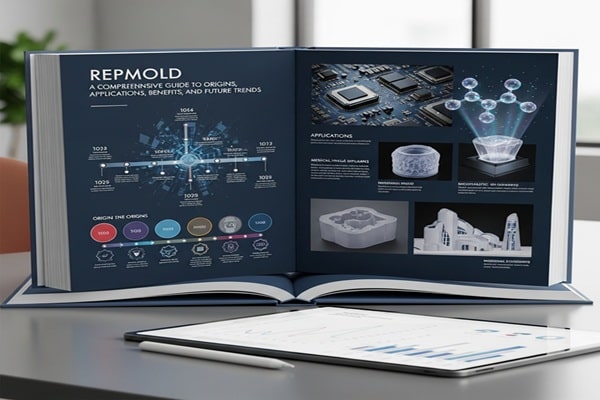
Repmold might sound like a technical term reserved for engineers or lab technicians, but it’s far more than that. Across multiple industries, Repmold has become synonymous with precision, efficiency, and adaptability. Whether you’re in manufacturing, research, digital technology, or design, understanding Repmold can help you see how modern processes achieve consistent results while reducing costs and errors.
In this guide, we’ll break down what Repmold is, where it came from, its key principles, practical applications, benefits, challenges, and emerging trends. By the end, you’ll see why professionals across sectors are relying on this concept to innovate smarter, not harder.
What is Repmold?
At its core, Repmold is a system, process, or methodology designed to ensure repeatable, accurate, and efficient outcomes. Think of it as a framework that takes complex procedures and makes them reliable and scalable.
While it may initially seem like a technical or niche term, Repmold has applications in manufacturing, laboratories, digital platforms, construction, and design. Its essence lies in bridging the gap between traditional methods and modern technological advancements—helping industries deliver consistent results without compromising quality.
The Origins of Repmold
Repmold emerged out of necessity. In earlier industrial and laboratory settings, accuracy relied heavily on individual skill. While craftsmanship was impressive, it often led to inconsistencies. Industries needed a system that could replicate results consistently and reduce human error.
The term itself hints at its purpose: “Rep” for repetition and “mold” for shaping or standardizing outputs. Its adoption began alongside industrialization, when machinery and structured processes became essential for mass production. Over time, Repmold evolved from a practical tool into a philosophy—one that emphasizes reliability and predictability in critical processes.
Industries quickly saw its value:
-
Manufacturing: Ensuring every product meets identical standards.
-
Pharmaceuticals: Guaranteeing reproducible test results for research credibility.
-
Laboratories: Maintaining scientific accuracy and consistency.
Repmold wasn’t a luxury—it was a necessity. And its relevance continues to grow as industries demand precision and efficiency.
Core Principles of Repmold
Repmold operates on three central principles. These principles define its value and explain why it remains indispensable across sectors.
| Core Principle | What It Means | Impact |
|---|---|---|
| Precision | Ability to replicate results with minimal variation | Ensures product quality, trust in research, and consistent outcomes |
| Efficiency | Streamlining processes to save time and resources | Reduces costs, accelerates production, and improves workflow |
| Adaptability | Capability to evolve with new technologies | Keeps systems relevant and scalable across industries |
Even as automation, AI, and digital modeling advance, these core principles remain the foundation of Repmold. Its adaptability ensures it can transition from manual systems to software-driven platforms without losing its reliability.
How Repmold is Applied Across Industries
Repmold isn’t confined to one sector—it’s a versatile concept that has practical applications wherever precision and consistency matter.
1. Manufacturing
Repmold ensures products meet exact specifications. From automotive parts to electronics, using Repmold principles reduces errors and waste. Mold-based production lines often rely on Repmold to guarantee identical outputs, making quality control more manageable and efficient.
2. Research & Development
Scientific studies and lab experiments thrive on reproducibility. Repmold provides systems to achieve repeatable results, critical in pharmaceuticals and academic research. Minor variations in testing can have huge consequences, making Repmold indispensable.
3. Digital Technology
In the digital world, Repmold helps in simulations, modeling, coding frameworks, and AI development. Accurate replication of digital environments is essential in sectors like gaming, AI training, and virtual simulations, where precision directly impacts outcomes.
4. Construction & Design
Architects and engineers use Repmold to ensure designs and plans are followed consistently. Repeated iterations remain faithful to the original blueprint, saving time, reducing errors, and strengthening structural integrity.
The Benefits of Repmold
Adopting Repmold systems brings measurable advantages, both operationally and strategically.
| Benefit | Why It Matters | Example |
|---|---|---|
| Cost Savings | Reduces errors, rework, and resource waste | Automotive manufacturers cutting production waste |
| Reliability | Guarantees consistent outcomes | Labs achieving reproducible results in experiments |
| Scalability | Allows processes to grow from small-scale to industrial | Tech startups expanding globally |
| Innovation | Integrates with AI, robotics, and digital platforms | Architecture firms using advanced digital modeling |
Beyond economics, Repmold also enhances safety. In high-stakes industries like aerospace or medicine, predictable processes reduce risks for workers and end-users alike.
Challenges and Limitations of Repmold
While Repmold offers substantial benefits, it isn’t without hurdles:
-
High Initial Costs: Implementing Repmold systems often requires significant investment in technology and training.
-
Dependency on Updates: Without regular modernization, Repmold systems can become outdated.
-
Reduced Flexibility: Some creative industries may find highly structured processes restrictive.
-
Over-Reliance: Excessive dependence on standardized procedures may limit experimentation.
Understanding these challenges is crucial for organizations that want to balance precision with innovation.
Also Read : AG1 Type C Adapter: Features, Benefits, Applications, and A Complete Informational Guide
Emerging Trends in Repmold
Repmold is evolving alongside technology. Key trends shaping its future include:
-
AI and Automation: Smarter systems allow processes to self-optimize and reduce human intervention.
-
Cloud-Based Platforms: Real-time data replication and global collaboration are now possible.
-
Sustainability: Industries are adopting eco-friendly materials and processes while maintaining consistency.
-
Digital Integration: Virtual simulations and AI modeling extend Repmold principles to entirely digital environments.
Industry leaders describe this evolution succinctly:
“Repmold is no longer just about replication—it’s about smarter replication.” – Manufacturing Expert
“The trust we place in results depends on the system that repeats them.” – Research Scientist
These insights show that Repmold is expanding, not diminishing, in importance.
Conclusion: Why Repmold Matters
Repmold is more than a technical term—it’s a philosophy that blends reliability, efficiency, and adaptability. From its roots in industrialization to modern AI-driven industries, it provides a framework that helps businesses and researchers achieve precision while maintaining flexibility.
Challenges like cost, dependency on updates, and reduced flexibility exist, but the long-term benefits—consistency, scalability, and innovation—far outweigh them. Repmold continues to bridge the gap between traditional methods and modern demands, making it an essential concept for industries that prioritize accuracy and efficiency.
FAQs About Repmold
Q1. What does Repmold mean?
Repmold is a system or process emphasizing repetition, accuracy, and efficiency to achieve consistent results.
Q2. Which industries rely on Repmold?
Major users include manufacturing, R&D, pharmaceuticals, construction, and digital technology.
Q3. What are the main benefits of using Repmold?
It offers cost savings, reliability, scalability, and integration with advanced technologies.
Q4. Are there challenges with Repmold?
Yes, such as high initial costs, dependency on updates, and reduced flexibility in creative fields.
Q5. What is the future of Repmold?
It lies in AI integration, automation, sustainability, and cloud-based platforms that expand adaptability.