
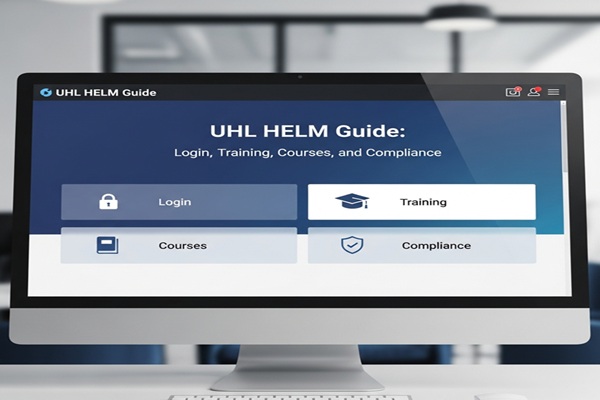
Let’s be honest for a second. If you work in healthcare, especially within the NHS, the words mandatory training probably make you sigh before you even finish reading the email. I’ve been there. That’s exactly why UHL HELM matters more than people give it credit for. It doesn’t magically make training fun, but it does make it clear, centralized, and manageable, which honestly feels like a small miracle.
If you’ve ever wondered what UHL HELM really is, how it works, or why everyone keeps mentioning it during induction, grab a coffee and settle in. Let’s talk about it like normal humans.
What Is UHL HELM, Really?
At its simplest, UHL HELM is the official online learning and training system for University Hospitals of Leicester NHS Trust. It’s where staff, trainees, and students go to complete, track, and manage their required learning.
Think of it as:
-
Your training hub
-
Your compliance tracker
-
Your proof that you actually did the courses
Instead of juggling emails, spreadsheets, and random links, UHL HELM puts everything in one place. And yes, that alone saves a ton of stress.
Ever logged into a system and thought, “Okay, at least this makes sense”? That’s the vibe HELM aims for.
Why UHL Uses HELM Instead of Something Else
Healthcare training isn’t optional. UHL needs a system that keeps everyone aligned, compliant, and up to date without constant chasing.
UHL HELM exists because it:
-
Centralizes mandatory training
-
Tracks completion automatically
-
Supports audits and reporting
-
Works for staff on rotating shifts
From a management perspective, HELM keeps things tidy. From a staff perspective, it avoids confusion. That balance matters.
Who Actually Uses UHL HELM?
Staff Members
Most UHL employees interact with HELM regularly. Nurses, doctors, admin staff, clinical support teamsif training applies to your role, HELM applies to you.
Students and Trainees
Students on placement and trainees also use UHL HELM. The system ensures everyone meets the same baseline standards, regardless of role.
Managers and Educators
Managers use HELM to:
-
Monitor compliance
-
Identify overdue training
-
Support teams proactively
It’s not about micromanaging. It’s about safety and accountability.
Logging Into UHL HELM Without the Headache
Let’s talk about the most common pain point: logging in.
How Login Usually Works
Youtypically log into UHL HELM using:
-
Your UHL or NHS email
-
Your assigned password
Once you enter, the dashboard shows your assigned courses, completed modules, and upcoming deadlines.
Simple in theory. Slightly annoying if you forget your password (we’ve all done it).
First-Time Access Tips
If you’re new:
-
Register using your official UHL email
-
Check junk folders for confirmation emails
-
Save your login details somewhere secure
FYI, most login issues come from using the wrong email. Double-check that first 🙂
What You’ll Find Inside the HELM Dashboard
The dashboard acts like your training control center. Everything important lives there.
Your Assigned Courses
You’ll see:
-
Mandatory training
-
Role-specific modules
-
Optional learning opportunities
Each course clearly shows its status. No guessing games.
Completion Records
HELM tracks:
-
Completed courses
-
Expiry dates
-
Certificates
That record matters during appraisals, audits, and role changes.
Deadlines and Alerts
HELM highlights overdue or upcoming training. It nudges you before things turn urgent, which I personally appreciate.
Mandatory Training on UHL HELM (The Big One)
Mandatory training sits at the heart of UHL HELM.
Common Mandatory Modules Include:
-
Health and safety
-
Infection prevention and control
-
Safeguarding
-
Fire safety
-
Data protection and GDPR
-
Equality and diversity
These courses protect patients, staff, and the organization. They might feel repetitive, but they exist for good reasons.
Ever noticed how these modules get quicker once you know what to expect? That’s HELM doing its job.
Online Learning vs Face-to-Face Training
Online Modules
HELM hosts a lot of e-learning. You can complete these:
-
At your own pace
-
From work or home
-
Around your shifts
This flexibility matters in healthcare.
Face-to-Face Training Records
HELM also records:
-
Classroom sessions
-
Practical workshops
-
Clinical skills training
That combo keeps your learning history complete, not fragmented.
How UHL HELM Supports Compliance
Compliance isn’t glamorous, but it’s critical.
HELM supports compliance by:
-
Automatically tracking completions
-
Flagging expired training
-
Providing reports for audits
Managers don’t need to chase people manually. Staff don’t need to prove they completed something years ago. Everyone wins.
UHL HELM vs Other NHS Learning Platforms
Let’s compare briefly.
What HELM Does Well
-
Clean, focused interface
-
Clear compliance tracking
-
Tailored to UHL needs
Where It Feels Basic
-
Limited personalization
-
Not flashy or modern-looking
IMO, that’s fine. HELM prioritizes function over style, and healthcare systems need reliability more than aesthetics.
Also Read : MES Mercedes Explained: Smart Manufacturing Behind the Brand
Common Issues People Face With UHL HELM
No system runs perfectly. Let’s keep it real.
Login Problems
Usually caused by:
-
Wrong email
-
Forgotten password
-
Account not activated
Solution? Contact training support early. Waiting doesn’t fix it.
Missing Courses
Sometimes courses don’t appear immediately. This often links to role assignments or HR updates.
A quick email usually solves it.
Slow Progress Tracking
Occasionally, completions take time to update. Refresh later before panicking.
Tips to Stay on Top of HELM Training
Staying organized saves stress.
My Go-To Tips
-
Check HELM monthly
-
Complete courses early
-
Screenshot completion confirmations
-
Use calendar reminders
These habits keep training from piling up.
Ever ignored HELM too long and regretted it later? Yeah… don’t do that again :/
Why UHL HELM Matters More Than You Think
It’s easy to dismiss HELM as “just another system.” That’s a mistake.
HELM protects:
-
Patient safety
-
Staff knowledge
-
Organizational standards
Behind every module sits a real-world scenario where knowledge matters.
UHL HELM and Career Progression
Here’s something people overlook.
Your HELM record:
-
Supports promotions
-
Helps during appraisals
-
Shows professional responsibility
Keeping it clean sends the right signal.
The Human Side of UHL HELM
I won’t pretend HELM feels exciting. But it does feel necessary and dependable.
When systems work quietly in the background, that’s a good thing.
Healthcare already feels intense. Training shouldn’t add chaos.
How UHL HELM Fits Into Daily NHS Life
HELM integrates into:
-
Inductions
-
Annual updates
-
Role changes
-
New responsibilities
It becomes part of the rhythm, not an interruption.
Once you accept that, it gets easier.
Security and Data Protection on HELM
Given the NHS context, data security matters.
HELM:
-
Protects personal records
-
Limits access appropriately
-
Aligns with NHS data standards
You don’t need to worry about training data floating around randomly.
Can You Access UHL HELM Outside Work?
In most cases, yes.
Online access allows:
-
Flexible learning
-
Less pressure during shifts
-
Better time management
That flexibility alone makes HELM valuable.
How HELM Supports Continuous Learning
HELM doesn’t stop at mandatory training.
You’ll often find:
-
Optional development modules
-
Refresher courses
-
Skill updates
That encourages growth beyond compliance.
UHL HELM for New Starters
For new staff, HELM acts as a roadmap.
It:
-
Introduces expectations
-
Sets clear priorities
-
Reduces confusion early on
Starting a new role feels overwhelming enough. HELM helps structure the learning side.
Final Thoughts on UHL HELM
Let’s wrap this up.
UHL HELM isn’t flashy, but it’s reliable. It keeps training organized, compliance visible, and learning accessible. It supports staff without adding unnecessary complexity.
If you treat HELM like a tool instead of a chore, it actually makes life easier.
So next time a HELM reminder pops up, don’t roll your eyes too hard. Knock it out, stay compliant, and move on with your day