

Building a Node.js API is relatively easy. Building a scalable, production-ready Node.js API that can handle thousands or millions of users reliably is an entirely different challenge. Scalability is not just about handling traffic spikes—it’s about designing systems that are resilient, maintainable, performant, and secure under real-world pressure. In this guide, we’ll explore practical strategies, architectural decisions, and production-grade techniques to help you build Node.js APIs that grow with your users instead of breaking under them.
TLDR: To build scalable Node.js APIs for production, focus on clean architecture, stateless design, efficient database usage, and horizontal scaling. Use clustering, caching, and load balancing to handle traffic growth. Implement monitoring, logging, and security best practices early. Scalability isn’t a feature you add later—it’s something you design for from day one.
1. Start with the Right Architecture
Scalability begins with structure. A messy codebase quickly becomes a bottleneck as traffic and development complexity increase. Choosing a clean and modular architecture will save you countless hours later.
Popular architectural patterns for scalable Node.js APIs include:
- Layered Architecture (Controller → Service → Repository)
- Clean Architecture
- Domain-Driven Design (DDD)
- Microservices Architecture (when scaling large systems)
At minimum, separate:
- Routing logic
- Business logic
- Data access layer
This separation improves maintainability and enables horizontal scaling later when splitting services becomes necessary.

2. Design APIs to Be Stateless
Stateless APIs are fundamental to scalability. A stateless API does not store session data in memory on the server between requests. Every request contains all the information the server needs.
Why does this matter?
Because stateless servers can easily scale horizontally. When you deploy multiple instances behind a load balancer, requests can go to any instance without issue.
Best practices for stateless APIs:
- Use JWT tokens or session stores like Redis instead of in-memory sessions.
- Avoid storing user session data inside Node.js processes.
- Keep services independent and self-contained.
When your API is stateless, adding more servers becomes trivial.
3. Leverage Node.js Clustering and Horizontal Scaling
Node.js runs on a single thread. While it is excellent for I/O-heavy tasks, one process alone cannot fully utilize multi-core CPUs. That’s where clustering comes in.
Use the Cluster Module
The built-in cluster module allows you to spawn multiple worker processes sharing the same server port.
- Each worker runs on a separate CPU core
- Incoming requests are distributed automatically
Alternatively, use tools like:
- PM2 (process manager with clustering built-in)
- Docker + Kubernetes (for container orchestration)
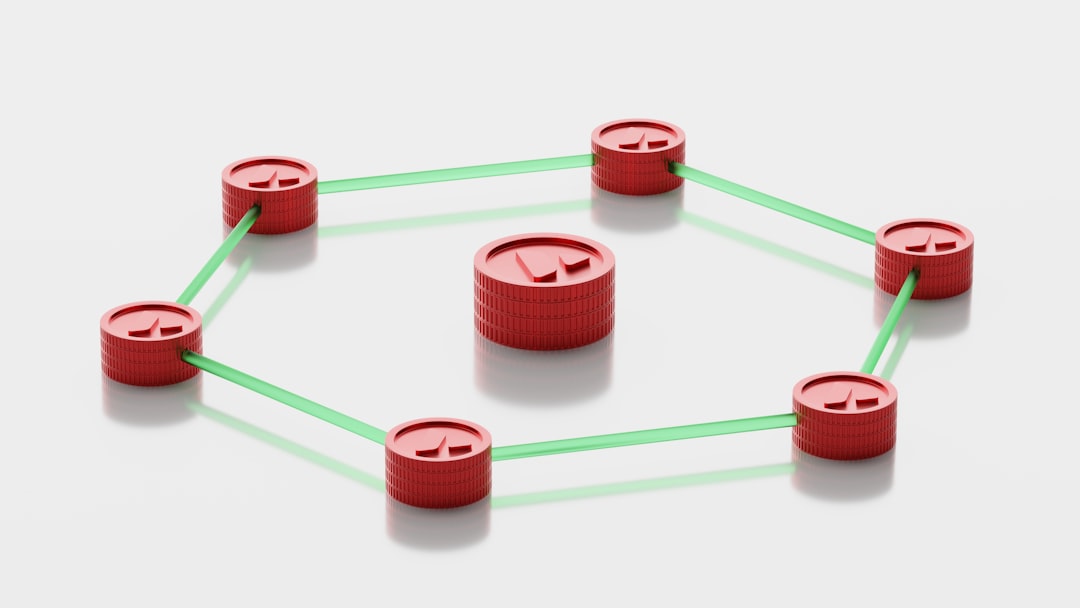
Horizontal Scaling
Vertical scaling (adding more CPU/RAM) has limits. Horizontal scaling (adding more machines) is the real scalability strategy.
To scale horizontally:
- Use a load balancer (Nginx, AWS ELB, Cloudflare)
- Deploy multiple containerized instances
- Store sessions externally (Redis, database)
4. Optimize Database Performance
Your database is often the first scaling bottleneck—not Node.js itself.
Common production issues include:
- Slow queries
- Missing indexes
- N+1 query problems
- Inefficient joins
Use Indexing Strategically
Indexes dramatically improve read performance but may slightly reduce write speed. Identify:
- Frequently queried fields
- Foreign keys
- Sorting and filtering columns
Connection Pooling
Create a managed connection pool using tools like:
- pg-pool for PostgreSQL
- mongoose pools for MongoDB
- Prisma’s built-in pool handling
Opening a new DB connection per request will ruin performance under load.
Read Replicas and Sharding
When traffic grows:
- Add read replicas for read-heavy workloads
- Implement database sharding for massive datasets
Scaling the database tier is often the most complex production challenge.
5. Implement Caching Strategically
Caching is one of the most powerful tools for scalability.
There are multiple caching layers:
- Application-level caching (Redis, Memcached)
- HTTP caching (ETags, Cache-Control headers)
- CDN caching (Cloudflare, Fastly)
Use Redis for Fast Data Access
Redis can cache:
- API responses
- Database query results
- Session data
- Rate limiting counters
A well-placed cache can reduce database calls by 70–90% in read-heavy systems.

6. Build Asynchronous and Non-Blocking Workflows
Node.js shines with asynchronous operations—but poor use of async patterns can still create bottlenecks.
Best practices:
- Use
async/awaitfor readability - Avoid blocking synchronous functions (like fs.readFileSync)
- Offload CPU-intensive tasks to worker threads
Queue Long-Running Tasks
Do not process heavy operations inside request-response cycles.
Instead:
- Use message queues (RabbitMQ, Kafka)
- Use job queues (BullMQ, Agenda)
- Process tasks in background workers
This keeps your API responsive under load.
7. Handle Errors and Failures Gracefully
Production systems fail. Scalable systems fail gracefully.
Implement:
- Centralized error handling middleware
- Timeouts for external services
- Circuit breakers (e.g., opossum library)
- Retries with exponential backoff
Never expose raw error stacks to users. Log detailed errors internally and return standardized responses.
8. Enforce Security from the Start
Security issues can destroy scalability by forcing emergency fixes under pressure.
Production security checklist:
- Use HTTPS everywhere
- Sanitize input data
- Protect against SQL/NoSQL injection
- Implement rate limiting
- Use helmet.js for secure HTTP headers
- Enable CORS properly
Rate Limiting
Rate limiting protects your API from abuse and DDoS attacks. Tools like express-rate-limit combined with Redis ensure distributed consistency.
Never underestimate how quickly an open endpoint can be abused in production.
9. Monitor, Log, and Observe Everything
You cannot scale what you cannot measure.
Logging
Use structured logging tools like:
- Winston
- Pino
Ship logs to centralized systems like ELK stack or Datadog.
Monitoring
Track:
- CPU usage
- Memory consumption
- Response times
- Error rates
Use tools such as:
- Prometheus + Grafana
- New Relic
- Datadog
Health Checks
Expose a /health endpoint so orchestrators (Kubernetes, load balancers) can automatically restart failing instances.
10. Automate Deployment and Infrastructure
Manual deployment does not scale.
Use:
- CI/CD pipelines (GitHub Actions, GitLab CI)
- Docker for consistent environments
- Kubernetes for orchestration
- Infrastructure as Code (Terraform, Pulumi)
Automation ensures:
- Fast iteration
- Reduced human error
- Consistent environments
- Reliable rollback strategies
11. Plan for Versioning and Backward Compatibility
APIs evolve. Production systems cannot simply break existing clients.
Use:
- URL versioning (e.g., /api/v1)
- Header-based versioning
Deprecate endpoints gradually and provide migration paths.
Scalability also means maintaining stability while evolving your system.
Final Thoughts
Scalable Node.js APIs are not built by accident. They are intentionally designed with stateless architectures, efficient databases, caching layers, horizontal scaling, security controls, and robust monitoring. Node.js provides the performance foundation, but true production readiness comes from engineering discipline.
As your system grows, bottlenecks will shift—from code to database to infrastructure. The key is continuous optimization, measurement, and architectural flexibility.
Design for scale early. Monitor constantly. Automate everything. And remember: scalability is not about handling today’s traffic—it’s about being ready for tomorrow’s growth.