
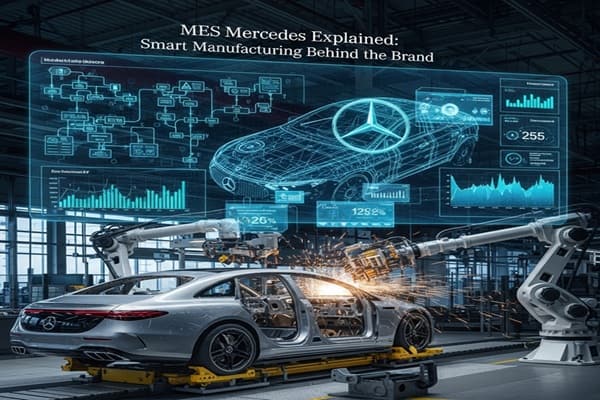
Alright, let’s talk MES Mercedes and yes, I’m already smiling because this topic sounds way more intimidating than it actually is. If you’ve ever wondered how Mercedes manages to crank out ridiculously precise vehicles without everything turning into factory chaos, this is where the magic happens. And trust me, once you “get” MES, you’ll never look at a Mercedes the same way again.
I’ve spent a lot of time geeking out over manufacturing tech, and Mercedes’ approach to MES always stands out. Not because it’s flashy (okay, maybe a little), but because it actually works in the real world. Ever wondered how thousands of parts, robots, humans, and software all stay in sync? Yeah… MES Mercedes is the answer.
So grab a coffee, sit back, and let’s break this down like two friends chatting about cool tech that quietly runs the world.
What Exactly Is MES at Mercedes?
Let’s start simple. MES stands for Manufacturing Execution System, and Mercedes uses it as the brain of its production operations. Think of it as the system that lives between planning and actual factory work.
Mercedes doesn’t just plan cars and hope for the best. The company actively tracks, controls, and optimizes every step of production using MES. That means real-time data, instant feedback, and fewer “oops” moments on the factory floor.
Ever seen a luxury car roll off the line with perfect panel gaps and flawless interiors? That doesn’t happen by accident, does it?
Why Mercedes Takes MES Seriously
Mercedes treats MES like a competitive weapon, not just a software tool. And honestly, that mindset shows.
The Core Reasons Mercedes Invests Heavily in MES
-
Real-time visibility into every production stage
-
Immediate problem detection before small issues explode
-
Consistent quality control across global factories
-
Scalable production for new models and EVs
IMO, this is where Mercedes quietly outclasses a lot of competitors. Some brands still react to problems after they happen. Mercedes prefers to stop them before they even start.
MES Mercedes and Quality Control
Let’s talk quality, because Mercedes definitely does.
How MES Protects Mercedes-Level Quality
MES tracks every component, every process, and every deviation. When something goes off-script, the system flags it instantly.
That means:
-
Operators fix issues in real time
-
Defective parts don’t sneak through
-
Data traces every car’s build history
I love this part because it’s not just about perfection it’s about accountability. Every bolt, sensor, and weld leaves a digital footprint. Ever wondered why Mercedes recalls feel more surgical than chaotic? This is why.
Real-Time Data: The Secret Sauce
Here’s where MES Mercedes really flexes.
Why Real-Time Data Changes Everything
Mercedes factories don’t rely on end-of-day reports. MES delivers live production data straight from machines, robots, and workers.
That includes:
-
Production speed
-
Error rates
-
Equipment health
-
Workforce efficiency
FYI, reacting instantly instead of hours later saves insane amounts of money. And yes, it also keeps stress levels lower on the factory floor. Nobody enjoys surprise problems at the end of a shift.
MES Mercedes vs Traditional Manufacturing Systems
Let’s be real older manufacturing systems feel like using a flip phone in a smartphone world.
What Makes Mercedes’ MES Different?
Traditional systems:
-
Rely on delayed reporting
-
Struggle with customization
-
Operate in silos
Mercedes’ MES:
-
Connects everything in real time
-
Supports complex configurations
-
Scales globally without drama
Ever tried to customize a car online and wondered how the factory keeps up? MES makes that possible without losing its mind :).
Supporting Mass Customization
Mercedes doesn’t just build cars. It builds your car.
How MES Handles Custom Orders
From paint color to interior trims, MES tracks every unique configuration as it moves through production.
That allows Mercedes to:
-
Build thousands of variations simultaneously
-
Avoid assembly mistakes
-
Deliver personalized vehicles faster
I’ve seen factories choke on customization. Mercedes embraces it. That confidence comes directly from a rock-solid MES foundation.
MES and Mercedes’ Electric Vehicle Strategy
EVs add complexity, and Mercedes knows it.
MES in the EV Production Line
Electric vehicles introduce:
-
Battery assembly tracking
-
High-voltage safety monitoring
-
New quality benchmarks
MES handles all of this without blinking. The system tracks battery modules, verifies safety checks, and ensures compliance at every step.
Ever wonder how Mercedes transitions smoothly from combustion engines to EVs? MES makes that shift manageable instead of terrifying.
Smart Factories and Industry 4.0
Mercedes doesn’t just talk about Industry 4.0 it actually lives it.
MES as the Backbone of Smart Manufacturing
MES connects:
-
AI-driven analytics
-
Robotics and automation
That creates factories that learn, adapt, and optimize themselves. Machines predict failures. Processes self-correct. Humans focus on higher-value tasks.
And yes, it sounds futuristic but Mercedes already does this today.
MES Mercedes and Workforce Efficiency
Let’s give humans some credit here.
How MES Helps Workers, Not Just Machines
MES provides:
-
Clear task instructions
-
Real-time alerts
-
Performance feedback
Instead of guessing, workers know exactly what to do and when. That reduces stress and boosts confidence.
I’ve always believed good tech should make jobs easier, not harder. Mercedes seems to agree.
Also Read : AI-Driven ERP Systems: Unlocking the Future of Nusaker’s Digital Transformation
Global Consistency Across Mercedes Plants
Mercedes builds cars all over the world, but the quality feels the same everywhere. Coincidence? Not even close.
MES as a Global Standard
MES enforces:
-
Unified production rules
-
Standardized quality checks
-
Shared performance metrics
So whether a car comes from Germany, the US, or Asia, the process stays consistent. That’s harder than it sounds, by the way.
Ever wondered how global brands avoid “factory personality differences”? MES keeps everyone on the same page.
Data-Driven Decision Making
Mercedes doesn’t guess. It measures.
MES Turns Data into Action
MES dashboards help managers:
-
Spot trends early
-
Compare factory performance
-
Optimize workflows
Instead of reacting emotionally, decisions rely on cold, hard data. That’s how you scale without losing control.
And honestly, this approach spills over into product design and supply chain strategy too.
MES and Predictive Maintenance
Breakdowns kill productivity. Mercedes hates downtime.
How MES Predicts Problems Before They Happen
MES monitors equipment health and flags warning signs early.
That enables:
-
Scheduled maintenance instead of emergency repairs
-
Longer equipment lifespan
-
Fewer production stoppages
Ever seen a factory grind to a halt over one broken machine? MES helps Mercedes avoid that nightmare.
Cybersecurity and Data Protection
With all this connectivity, security matters.
How Mercedes Protects MES Data
Mercedes builds strong security layers around MES:
-
Controlled access permissions
-
Encrypted data flows
-
Continuous monitoring
That ensures sensitive production data stays safe. And let’s be honest losing manufacturing data would be a disaster.
Challenges Mercedes Faces with MES
Okay, let’s keep it real. MES isn’t magic.
Common MES Challenges
-
Integration with legacy systems
-
Training employees
-
Managing massive data volumes
Mercedes tackles these head-on with training programs and gradual system upgrades. No shortcuts here.
IMO, acknowledging challenges makes the system more impressive not less.
Continuous Improvement Through MES
Mercedes never treats MES as “done.”
Why MES Keeps Evolving
Mercedes constantly updates:
-
Analytics models
-
User interfaces
-
Automation rules
That mindset keeps the system relevant as production demands change. Standing still in manufacturing equals falling behind.
Ever notice how Mercedes always feels a step ahead? This is part of why.
MES Mercedes and Sustainability Goals
Sustainability isn’t just marketing fluff here.
MES Helps Reduce Waste and Energy Use
MES tracks:
-
Material usage
-
Energy consumption
-
Process inefficiencies
That data helps Mercedes cut waste and reduce emissions. Efficient production isn’t just cheaper it’s greener too.
Win-win, right?
Why MES Gives Mercedes a Competitive Edge
Let’s zoom out for a second.
The Big Advantages of MES Mercedes
-
Higher quality vehicles
-
Faster production cycles
-
Lower operational risk
-
Scalable innovation
This isn’t about fancy dashboards. It’s about control, confidence, and consistency.
Ever wondered why Mercedes rarely feels rushed or sloppy? MES keeps everything grounded.
Final Thoughts on MES Mercedes
So yeah, MES Mercedes might sound like a dry technical topic, but it quietly powers everything we admire about the brand. From quality and customization to EVs and sustainability, MES sits at the center of it all.
If you ask me, Mercedes doesn’t just build luxury cars it builds systems that build luxury cars. And that’s way cooler than it sounds.
Next time you see that three-pointed star roll by, you’ll know there’s a digital brain behind it, making sure everything went exactly as planned. Pretty awesome, right?