Modern warehouses are under more pressure than ever before. Faster shipping expectations, labor shortages, increasing SKU counts, and rising real estate costs have pushed companies to rethink traditional operations. One of the most powerful solutions to these challenges is the adoption of warehouse robotics platforms. These intelligent systems combine hardware, software, and automation to streamline workflows, reduce errors, and significantly increase productivity across fulfillment centers of all sizes.
TLDR: Warehouse robotics platforms use autonomous robots, AI-driven software, and real-time data to streamline picking, packing, and inventory movement. They reduce labor strain, increase accuracy, and accelerate order fulfillment. From autonomous mobile robots to robotic picking arms, these platforms integrate with warehouse management systems to optimize operations. Businesses adopting robotics often see measurable improvements in efficiency, scalability, and cost control.
Rather than replacing entire teams, today’s robotics platforms are designed to collaborate with human workers. They eliminate repetitive and physically demanding tasks while empowering staff to focus on higher-value responsibilities. Let’s explore how these platforms work and which technologies are leading the transformation.
What Is a Warehouse Robotics Platform?
A warehouse robotics platform is a combination of robotic hardware, fleet management software, AI navigation systems, and warehouse integration tools designed to automate material handling tasks. These platforms don’t simply deploy robots; they orchestrate an entire ecosystem that manages:
- Inventory transport between storage and packing stations
- Order picking with guided workflows
- Sorting and consolidation
- Real-time warehouse mapping
- Data collection and analytics
The core advantage lies in their adaptability. Unlike traditional fixed automation systems such as conveyor belts, many robotics platforms are flexible and scalable. You can deploy additional robots during peak season and scale down during slower periods.
Key Types of Warehouse Robots
Different operational challenges require different robotic solutions. Below are the most common categories powering modern warehouses:
1. Autonomous Mobile Robots (AMRs)
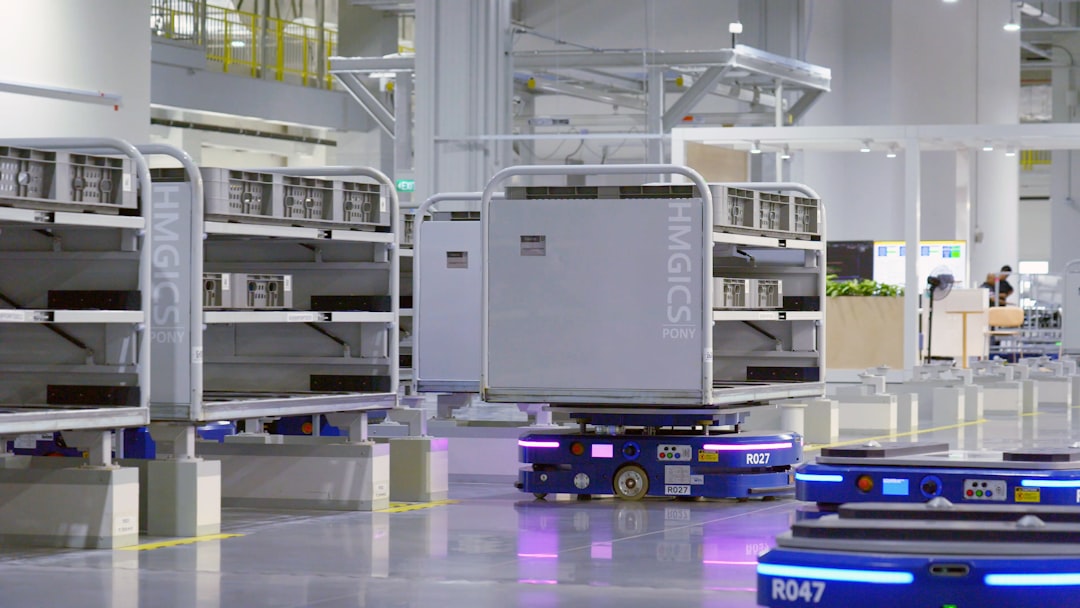
AMRs independently navigate warehouse floors using sensors, cameras, and AI-based mapping systems. Unlike automated guided vehicles (AGVs), they don’t rely on fixed tracks or magnetic strips.
Image not found in postmetaHow they improve productivity:
- Reduce walking time for pickers
- Optimize travel routes in real time
- Lower workplace fatigue
- Quickly adapt to layout changes
AMRs are ideal for goods-to-person picking models, where inventory is brought directly to operators rather than requiring workers to walk miles per shift.
2. Robotic Picking Arms
These stationary or semi-mobile robotic systems use AI vision technology and grippers to identify, grasp, and move products.
Benefits include:
- Consistent picking accuracy
- 24/7 operational capability
- Reduced dependency on manual sorting
- Integration with conveyor or AMR systems
Advanced robotic arms can now handle items of varying sizes, shapes, and fragility thanks to improvements in machine learning and soft gripping technologies.
3. Automated Storage and Retrieval Systems (ASRS)
ASRS platforms use robotic shuttles, cranes, or vertical lift modules to automatically store and retrieve inventory from dense storage configurations.
Productivity impact:
- Maximized vertical storage space
- Faster retrieval times
- Better inventory accuracy
- Reduced real estate costs
These systems are especially effective for facilities with high SKU volumes and limited floor space.
4. Robotic Sorting Systems
Sorting robots quickly categorize items by destination, order number, or shipping method.
Why it matters:
- Speeds up outbound logistics
- Minimizes shipping errors
- Handles high parcel volumes during peak seasons
Core Features of Modern Robotics Platforms
Beyond individual robots, it’s the platform layer that truly drives productivity improvements. The software tied to robotics systems often includes:
- Fleet orchestration tools that coordinate hundreds of robots simultaneously
- AI-driven optimization to reduce travel time and congestion
- Integration APIs for warehouse management systems (WMS)
- Predictive maintenance alerts
- Real-time performance dashboards
This digital control layer ensures that robots operate efficiently without interfering with one another or human workers.
Comparison of Leading Warehouse Robotics Platform Types
| Platform Type | Primary Function | Best For | Scalability | Investment Level |
|---|---|---|---|---|
| Autonomous Mobile Robots (AMRs) | Transport goods | Order picking optimization | High | Moderate |
| Robotic Picking Arms | Item selection and handling | High volume fulfillment | Medium | High |
| ASRS Systems | Dense storage and retrieval | Space constrained facilities | Medium | High |
| Sorting Robots | Parcel and item classification | Ecommerce distribution centers | High | Moderate to High |
How Robotics Platforms Improve Warehouse Productivity
1. Reduced Travel Time
Warehouse associates often spend over 50% of their shift walking. Robotics platforms drastically reduce this non-productive movement by bringing inventory directly to packing stations.
2. Improved Picking Accuracy
AI-assisted picking systems and barcode scanning significantly cut down mis-picks. This not only saves time but also prevents costly returns and reshipments.
3. Faster Order Throughput
Robots can operate continuously without fatigue, increasing units picked per hour and accelerating shipping timelines.
4. Enhanced Safety
Heavy lifting, repetitive strain, and forklift accidents can be reduced by letting robots handle dangerous tasks.
5. Real-Time Inventory Visibility
Integrated robotics platforms feed data directly into analytics systems. Managers gain instant visibility into stock levels, order status, and operational bottlenecks.

Scalability and Flexibility Advantages
One of the biggest reasons warehouses are choosing modern robotics platforms over traditional automation is flexibility. Conveyor systems require permanent installation, while many robot fleets can be deployed in weeks.
Key scalability benefits:
- Add robots during peak seasons
- Reconfigure workflows digitally rather than physically
- Expand to new facilities with minimal infrastructure upgrades
- Adjust routes and storage zones dynamically
This pay-as-you-grow model makes advanced automation accessible even to mid-sized operations.
Integration with Human Workers
Contrary to common misconceptions, robotics platforms are typically implemented as collaborative systems. Workers interact with robots via touchscreens, handheld devices, or wearable technology.
Productivity increases because:
- Employees focus on quality control and exception handling
- Robots manage repetitive transport duties
- Training time decreases due to guided workflows
Many companies report improved employee satisfaction after deployment because physical strain decreases and workflows become more structured.
ROI and Cost Considerations
While robotics platforms require upfront investment, the long-term returns often justify the cost. Savings typically come from:
- Lower labor dependency
- Reduced turnover and hiring costs
- Fewer order errors
- Optimized warehouse space utilization
- Decreased workplace injury claims
Return on investment timelines can range from 12 to 36 months depending on facility size and operational complexity.
Future Trends in Warehouse Robotics
The next generation of warehouse robotics platforms is moving toward greater intelligence and autonomy. Emerging trends include:
- Swarm robotics where fleets coordinate like hive systems
- AI-driven demand forecasting integration
- Cloud-based robotics management
- Advanced 3D vision for complex picking scenarios
- Robotics-as-a-service subscription models
As machine learning algorithms improve, robots will increasingly make predictive decisions about routing, replenishment, and maintenance without human input.
Choosing the Right Robotics Platform
Selecting the ideal platform depends on several operational variables:
- Order volume and growth projections
- SKU count and product diversity
- Facility layout constraints
- Existing warehouse management system compatibility
- Budget and ROI expectations
A phased implementation often works best. Start with transport automation through AMRs, then expand into robotic picking or advanced storage systems as efficiency gains accumulate.
Final Thoughts
Warehouse robotics platforms are not just a trend—they are quickly becoming a competitive necessity. By combining intelligent software orchestration with flexible robotic hardware, businesses can dramatically improve productivity, reduce errors, and create safer working environments.
In a marketplace defined by speed and accuracy, companies that embrace robotics gain a measurable operational edge. Whether through mobile robots that shorten picking routes or fully automated storage systems that maximize vertical space, the future of warehousing is increasingly automated, data-driven, and remarkably efficient.
The true power of warehouse robotics lies not in replacing people, but in augmenting their capabilities. When humans and robots work together under a unified platform, productivity doesn’t just increase—it transforms.